Welcome to part 3 of our new series on ultra-processed food: a State of the Union Address.
In the three years since my first deep-dive into UPFs there has been a gear shift, both in terms of the public discourse and scientific evidence around UPFs. My State of the Union Address is an attempt to synthesise the main debates, tensions, and the response to the ‘crisis’ of UPFs.
In case you missed it, two weeks ago we discussed where we are now. Part one of the series attempted to situate us in the here and now, looking at how much of our diet is made up of UPFs, and gave a bit of an update about what is happening socially, culturally, academically, and politically. We spent a long time thinking about the definition of UPFs and I introduced my ‘kitchen sink’ theory of nutrition and why we can never really know what a UPF is.
Last week, we looked at whether UPFs represent a paradigm shift, or just a shit paradigm? In part two we explored the major scientific developments over the past few years and grappled with whether or not UPFs are a helpful construct. We got a little nerdy; I wanted you to go away with a good sense of what scientists agree on, and where there are still some unresolved tensions.
Today we’re covering: Nature, Nostalgia, and Sheryl Sandberg - how the food industry is responding to UPFs. This is where I think the really interesting stuff is happening. I find it very funny watching the food industry try to square the UPF circle. Here I’ll share some of the tactics they’re using, which reveal inconsistencies, loopholes, and how the house always wins.
And finally, next week we’ll look at why The Personal (Responsibility) is Political. Part four will be an exploration of how the hybrid scientific-political project of UPF ‘activism’ may be deepening inequality and increasing stigma along the lines of gender, class, and race by further entrenching ideas about ‘good’ and ‘bad’ foods.
February 2020 was, for virtually all of us, the point of no return. A last gasp of breath before fear, uncertainty, and panic buying TP set in. And while early 2020 will always be synonymous with contagion, unimaginable human loss, and a mass disabling event, it also marks a shattering in our cultural awareness of ultra-processed foods.
This was the moment that Bee Wilson began pontificating about UPFs in the Guardian. Three years later, Chris van Tulleken published Ultra-Processed People. And if Wilson brought UPF to the middle class, CvT brought it to the masses. Since then, we’ve been inundated with articles instructing us which foods are better alternatives to UPFs, apps to scan barcodes in the supermarket, UPF-free cookbooks (an unbelievably stupid pretence for a cookbook), so many podcasts with Tim Spector, more books, more articles, and ironically in the GLP-1 era, more food noise. Even Joe Wicks got involved. The world has been forever changed, and we cannot unsee UPFs.
I find it all really tiresome. And so, so boring.
And I have a feeling my friends in the food industry (derogatory) are over it too because they are out there losing their fucking minds over how to square this circle; they’re shitting their proverbial pants. I want to take a look at some of the tactics the food industry is using to distance themselves from notions of UPF. But first, I think it’s useful to talk about how exactly the UPF frame is functioning to drive consumer demand and therefore the industry response.
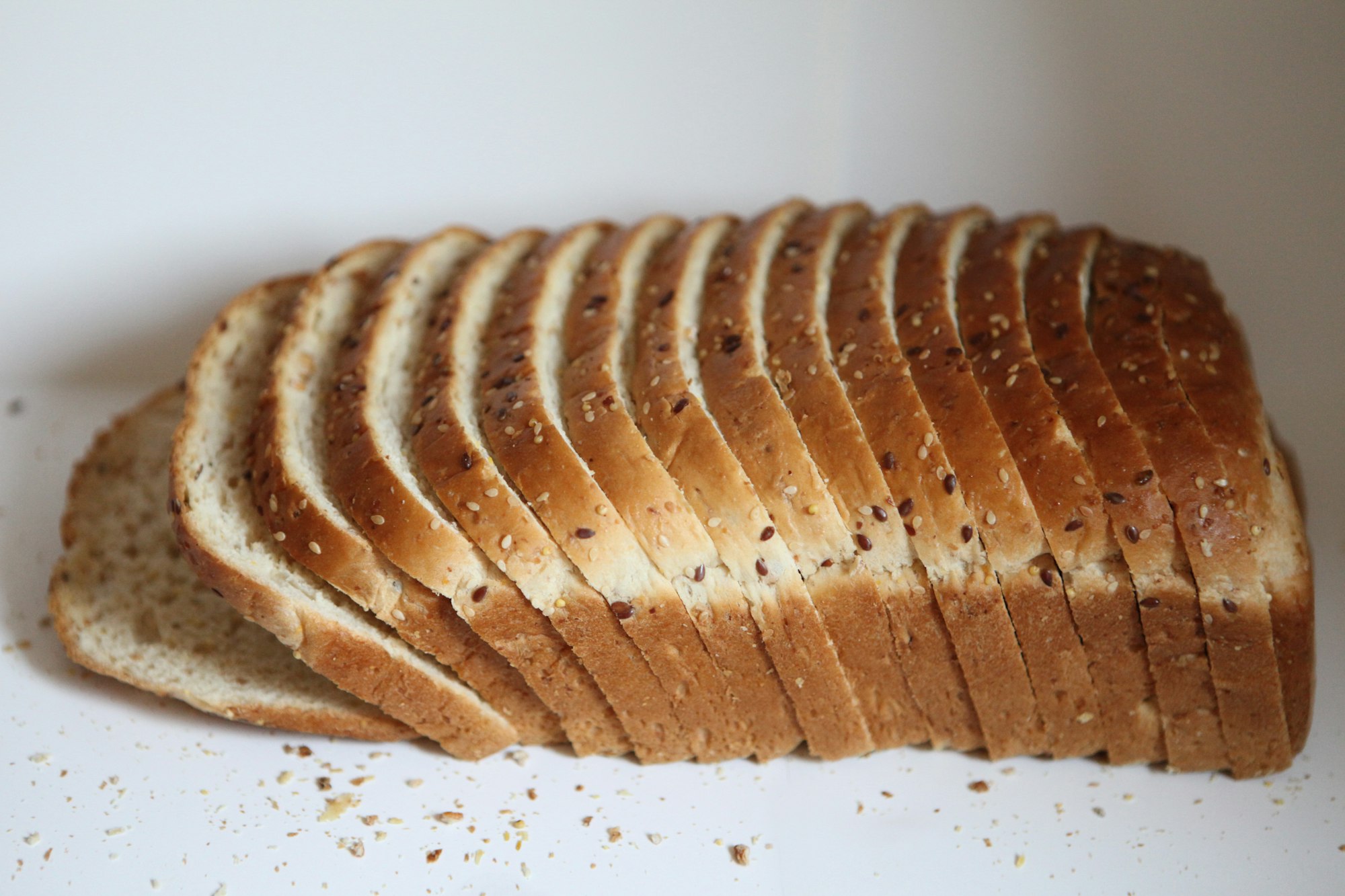
Two things are happening simultaneously. As I’ve argued elsewhere in this series, the UPF frame acts much like a deep sea trawler that inadvertently catches dolphins and sea turtles in its nets. In the same way, the broad category of UPF expands our previous understanding of what a ‘bad’ food is. While ‘fast’ food and ‘junk’ food have historically been markers of dietary deviance, branding consumers as feckless and irresponsible, the UPF frame includes a broader range of everyday foods that were previously thought of as ‘healthy’ or ‘nutritious’. This includes many everyday staples; things like supermarket loaves of bread, baked beans, fortified plant-based milks, and so on.
Secondly, in the contemporary foodscape, UPFs have quickly become entangled with immorality and disobedience. For instance, in Ultra Processed People, Chris van Tulleken leans heavily on disgust as a discursive strategy to make the reader repulsed by the idea of UPFs, and in so doing, marks the eater out as disgusting. Likewise, Bee Wilson equates UPFs with binging; a much maligned behaviour associated with gluttony and greed. It is deemed morally reprehensible and therefore disgusting. (1) Lastly, ‘Big Food’ is constructed as being run by a corrupt shadow-y cabal. And while skepticism and critique of the food system is justified, foods and their eaters have become contaminated along the way, marking them as obscene.
These two things together have resulted in a narrowing of the types of food that are considered ‘acceptable’ to eat.
The ‘food industry’ operates within a moral economy – it is both shaped by what consumers deem to be good and morally correct, and in turn shapes what consumers deem to be good and morally correct. This is a dynamic and iterative process, and far less deterministic than the popular narrative van Tulleken, Wilson, et al., would have us believe. It creates a sort of tug-of-war between consumers and industry. Right now consumers are demanding ‘clean’, ‘natural’, ‘whole’ foods. They want fewer ingredients in the products they buy. They don’t want additives or preservatives or emulsifiers. They don’t want to support Big Food.
It is extremely funny to watch food companies tie themselves in knots trying to square this circle and try to reinvent themselves as The Good Guys - moral actors in a fundamentally fucked system. Here are some of the ways I’ve seen it play out.
Natural Nostalgia
This post is for paying subscribers only
Sign up now and upgrade your account to read the post and get access to the full library of posts for paying subscribers only.