Welcome to part 2 of the CIHAS State of the Union Address on Ultra-Processed Food.
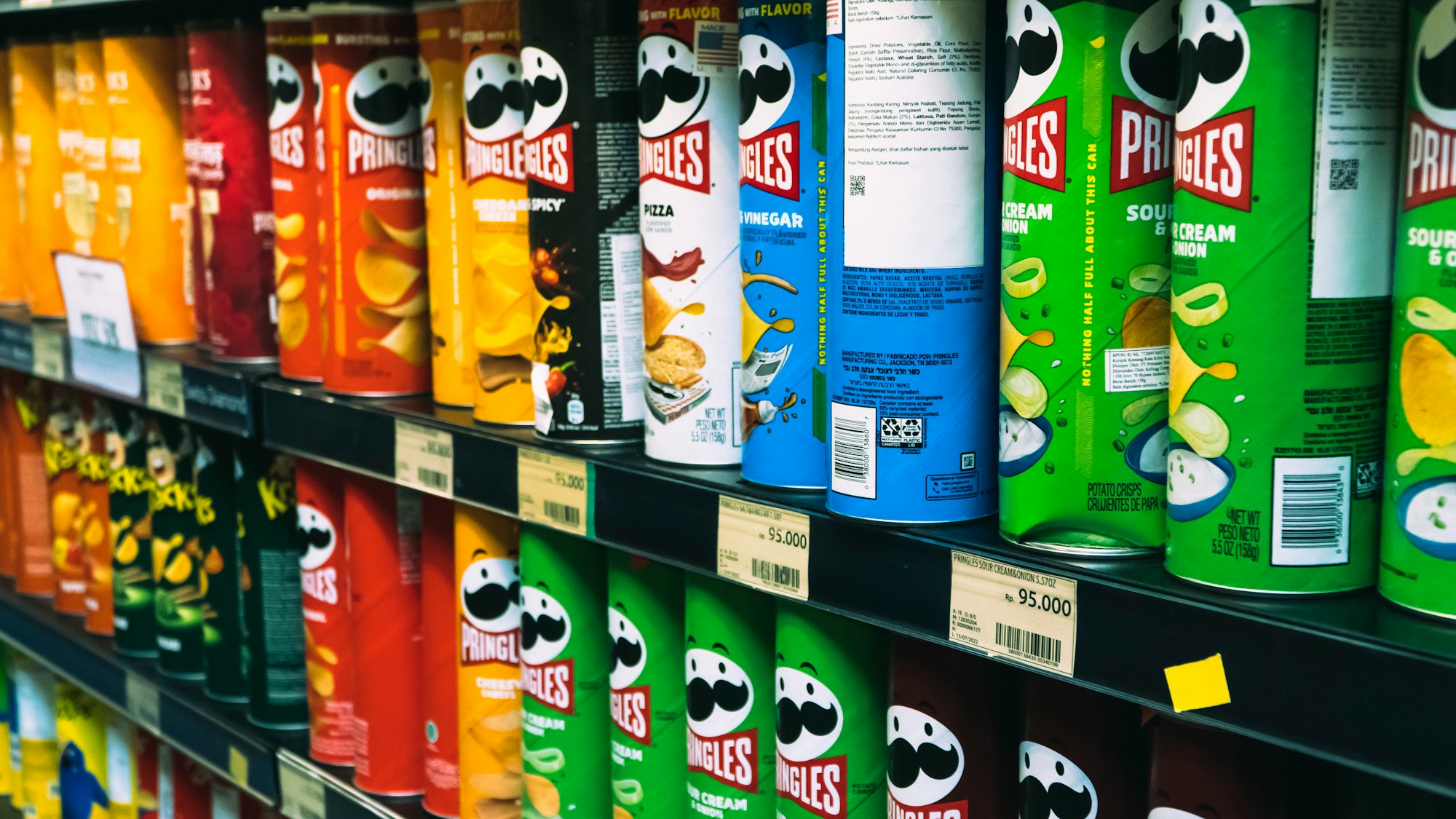
In case you missed it, last week we discussed where we are now. Part one attempted to situate us in the here and now, looking at how much of our diet is made up of UPFs, and gave a bit of an update about what is happening socially, culturally, academically, and politically. We spent a long time thinking about the definition of UPFs and I introduced my ‘kitchen sink’ theory of nutrition and why we can never really know what a UPF is. It's giving chaotic conception in the worst possible way.
Today we’re going to dissect whether or not the concept of UPFs is a paradigm shift, or just a shit paradigm? In part two we’ll explore the major scientific developments over the past few years and grapple with whether or not UPFs are a helpful construct. We’ll get a little nerdy; I want you to go away with a good sense of what scientists agree on, and where there are still some unresolved tensions.
Nature, Nostalgia, and Sheryl Sandberg - how the food industry is responding to UPFs. Next week I’ll share part three, which is where I think the really interesting stuff is happening. I find it very funny watching the food industry try to square the UPF circle. Here I’ll share some of the tactics they’re using, which reveal inconsistencies, loopholes, and how the house always wins.
The Personal (Responsibility) is Political. Part four will be an exploration of how the hybrid scientific-political project of UPF ‘activism’ may be deepening inequality and increasing stigma along the lines of gender, class, and race by further entrenching ideas about ‘good’ and ‘bad’ foods.
As we discussed last week, in 2023 the Scientific Advisory Committee on Nutrition (SACN) deemed that while there was evidence that UPFs were associated with increased health risks, there were a number of methodological concerns and gaps in the evidence that they felt warranted further research.
Two years later, in 2025, among growing evidence and calls for regulation, SACN produced a rapid evidence update summary. In it they reiterated existing advice on processed foods, particularly on minimising intake of sugar-sweetened beverages and avoiding high intakes of red and processed meat. They also made some more specific recommendations, including for industry to make their processing methods more transparent, and to monitor intakes of artificial sweeteners and emulsifiers.
In September this year, minutes from a SACN committee meeting apparently revealed that they are still reticent to make specific recommendations about ultra-processed food as defined, however chaotically, by the Nova classification system.
This reluctance has been met with sharp criticism from public health advocates who say that the food industry has too much clout over nutrition and public health policy, vis-a-vis their relationship with scientists. Researchers counter that they need to partner with industry in order to help make their products as healthy as possible and to drive change from within. Public health advocates say that any association with industry compromises a scientist's integrity and that public health policy should have no interference from the food industry whatsoever.
I’m not interested in who is ‘right’ or ‘wrong’ in this debate – for what it’s worth I think there are bad actors on both sides – but the circularity of the arguments is interesting to me. It only adds to the chaotic conception of UPFs we talked about last week. Science, no matter how free from industry interference, is never impartial. It is produced in relation to social, cultural, and political forces that shape, enable and constrain knowledge production over a period in time; what Foucault would call an episteme. For instance, Francis Galton’s ideas about eugenics emerged on the background of slavery and racialised capitalism. And, as we’ve discussed before, there are threads of eugenic and euthenic thinking in modern nutritional sciences, particularly when it comes to ideas around fatness and disability. It’s disingenuous, I think, to pretend as though the Nova classification isn’t a scientific-political project. And even if advocates believe it to be the morally correct position (which I think they do), that doesn’t mean we shouldn’t be attentive to underlying ideology. This is exactly why we should take a critical stance to both factions.
The debates and posturing, from both sides (stoked by the media), distracts from what is really a fairly unremarkable set of findings.
In today’s essay I’d like to lay out the major findings of the relationship between UPFs and human health, and then outline the main debates that plague both the science, and the discourse, as laid out in The Lancet series on UPFs published in November 2025.
The State of The Evidence
This post is for paying subscribers only
Sign up now and upgrade your account to read the post and get access to the full library of posts for paying subscribers only.