Welcome to a new CIHAS series - monthly interviews with cool people doing interesting work. Whilst we've hit pause on the podcast, I've introduced a new written interview series with the kinds of people I would want to have on the podcast. People whose work makes my brain light up and I can't stop thinking about. I have a few people in mind – mostly academics – but if you have any recommendations then please drop names in the comments!
Today's interview is with Francesca Vaghi, Postdoctoral Fellow at the Western Norway University of Applied Sciences in Bergen, where she researches education for sustainability in early childhood education and care (ECEC). Francesca completed her PhD in Anthropology at SOAS, University of London, in 2019. Her project investigated how children create self and peer identities through food and eating practices, how children’s food policy fits into family intervention policies in the context of Britain’s mixed economy of welfare, and how notions of ‘good food’ and ‘good parenting’ (particularly mothering) are interlinked. I found this conversation with Francesca so interesting and I'm sure you will too! Enjoy!
Laura: Hi Francesca, thanks so much for agreeing to talk to us. I’m a big fan of your work. Can you start out by telling us a little bit about who you are and the work you do, especially the ethnographic study you did for your PhD.
Francesca: Thanks very much for inviting me to take part in this conversation! I am impressed by your work at CIHAS, it is important and refreshing.
I am an anthropologist and childhood scholar, particularly interested in early childhood education and care (ECEC), children’s food policy, and social inequality. My PhD research explored food and mealtimes in kindergartens. As you, and many of your readers may know, the ethnographic approach involves ‘deep hanging out’ within a specific community. I spent one year (2016-2017) in a kindergarten in London, doubling as a researcher and volunteer childcarer. I carried out participant observation, which involved helping out the ECEC staff in this particular setting with daily routines, especially at mealtimes (of course!), and child-centred methods (such as drawing activities, photo-elicitation, and role-play). On a micro-level, the project explored children’s views and experiences of food and meals in kindergarten, and by doing so, one of my key findings is that whilst adults care what children eat, children care how they eat (I will say more about this below). On a macro-level, I was interested in finding out how children’s food policy, public health, and family intervention policy intersect. Through policy analysis and ethnographic enquiry, I found that official discourse about children’s food often ignores the structural factors that impact people’s access to adequate and sufficient food, portraying ‘problems’ with children’s diets as predominantly caused by ‘bad parenting’, lack of knowledge and skills, or insufficient early intervention and education.
Between finishing my PhD in 2019 and my current postdoctoral role, I also worked as a User Researcher at NHS 24 (Scotland’s telehealth service), in the charity sector, and as a postdoctoral researcher in a project about the work of NHS charities. My heart has always been in ECEC research, however, so I am delighted to now be working in this space again. My current project (broadly) focuses on education for sustainability in kindergartens, this time in the Norwegian context.
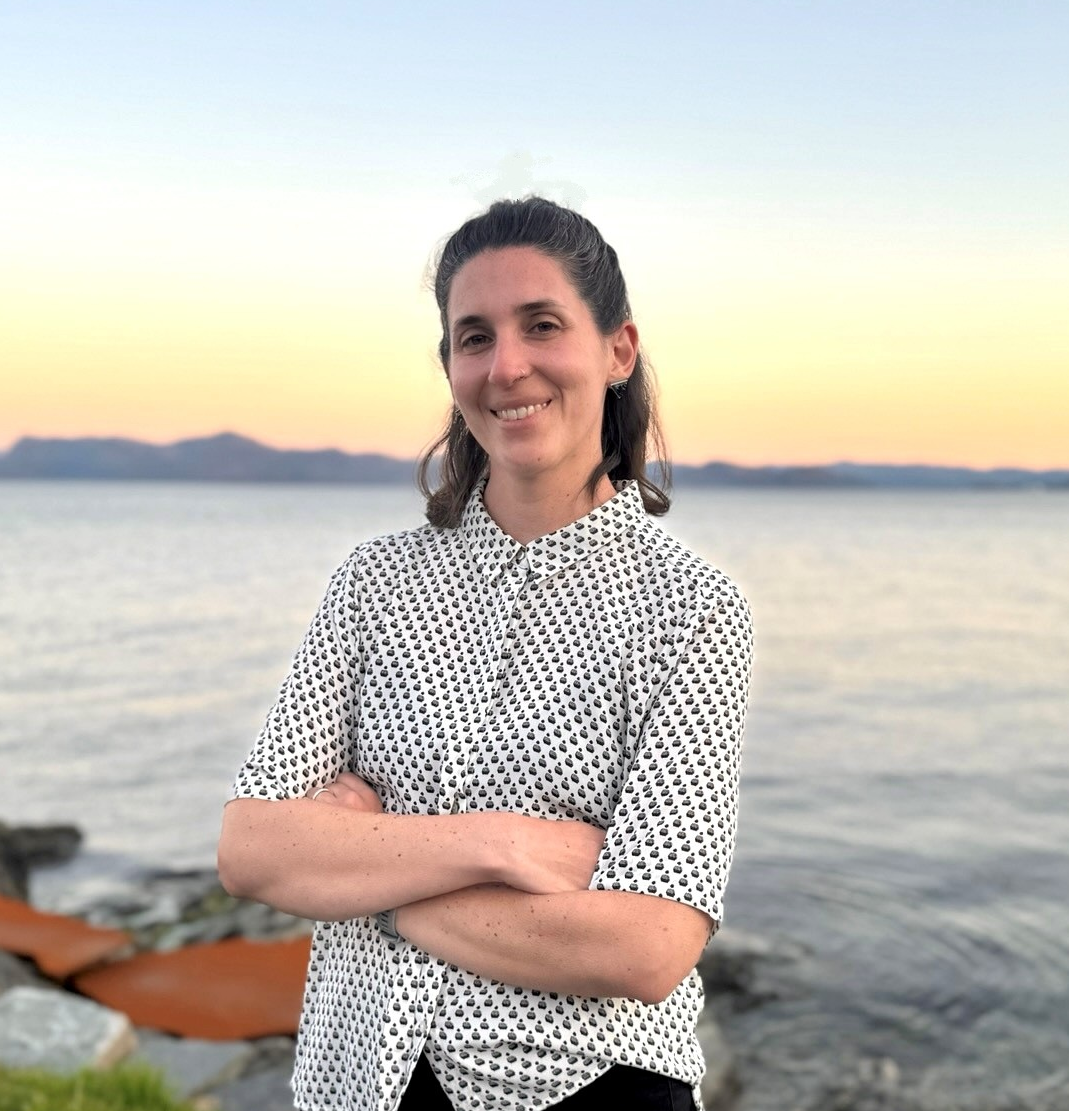
Today's interviewee, Francesca Vaghi
Laura: There is so much emphasis on school food and nutrition policy that I think the early years get under-analysed. Is this something you were conscious of when you began your study? What made you want to explore this particular setting?
Francesca: There is definitely less emphasis on children’s food in kindergartens, and I think part of the reason is that ECEC is not statutory in most countries. This means that regulations and guidance around what is served in kindergartens are voluntary, and each setting can choose what food to provide (if any). I was aware of this going into my project, although I was perhaps quite naive at the time about what the implications are. In the U.K., it means that there are different organisations (mostly NGOs, but also medical experts, or educational authorities) who fill that policy gap, which more often than not creates confusion and contradictions, for ECEC professionals and families alike.
I wanted to research the early years because I was (and still am) interested in examining the contrast between policy rhetoric focusing on the importance of a child’s first years of life, and genuine government action taken to support those early years. Food is a particularly interesting lens through which to explore that contrast. An example from my PhD project: while kindergartens were being encouraged by the local authority to serve more fresh fruits and vegetables to children, public funds to settings were steadily diminishing, so that kindergartens like the one I was doing research in could no longer buy fruits and vegetables to provide as snacks. This situation was by and large a consequence of austerity politics, however I think it also points to a pattern, whereby political actors back early years causes that are ‘easy wins’ (who can argue against more fresh fruit for children in kindergartens?) without actually investing in said causes. The same can be said about various U.K. governments’ pledges to make more free childcare places available to families, a topic that has regularly been in the spotlight since at least 2015, when I started my PhD. It is disheartening that these promises continue to be made at the same time that early years professionals have consistently said there are not enough resources to meet these demands, and the ECEC sector continues to be underfunded.
📣
Upcoming webinar! Raising Embodied Eaters will be hosted online on Thursday 14th May at 7-8.30pm BST. This workshop is designed for parents and caregivers, as well as teachers/nutrition professionals/anyone else involved in feeding kids, and aims to help you feel more confident and resourced at all stages of kid-feeding, from starting to solids to older independent eaters. Find out more and grab your £15 tickets here.
Laura: We talk a lot about the gendered and classed dimensions of foodwork here on CIHAS, and this is a thread that runs through your work too. Can you speak to the interface between mothers and the state via the children's centre? Can you tell us a little bit about assumptions of ‘good’ and ‘bad’ parenting that underpin nutrition-related interventions?