Welcome to a new CIHAS series - monthly interviews with cool people doing interesting work. Last year, when our podcast editor and co-host of our ALL OF THE SNACKS podcast episodes Lucy moved on, I decided not to find a replacement. I loved making the podcast with Lucy, but it was becoming increasingly difficult to justify the cost. I would love to be able to grow the newsletter to a place where we could have a podcast strand again, but it's not on the cards right now. In the meantime, I wanted to introduce a written interview series with the kinds of people I would want to have on the podcast. People whose work makes my brain light up and I can't stop thinking about. I have a few people in mind – mostly academics – but if you have any recommendations then please drop names in the comments!
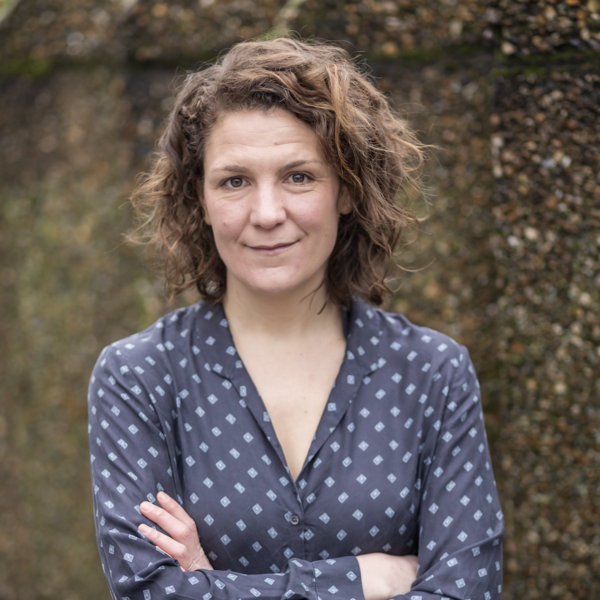
Today's interview is with the brilliant Dr. Emily Baughan. Emily is a historian of modern childhood, lecturer in 19th/20th Century British History at the University of Sheffield, and author - her first book, Saving the Children: Humanitarianism, Internationalism and Empire was published in 2021.
We recently had a chat here at CIHAS about our experiences of milk feeding our babies. That was in anticipation of this conversation, and I'd encourage you to go back and read through the comments.
As I say in that thread, since the age of 18 when I started studying nutrition, I'd received the message that 'breast is beast'. I know many of you will have heard the same before, during, and after pregnancy. I also know that many of you will have been made to feel as though formula was the 'easy way out', a 'last resort', or a straight up 'failure'. At the same time, breastfeeding implicitly requires a level of martyrdom – a loss of autonomy, time, agency, and more – that nobody at a policy level seems to grapple with. The idea that breastfeeding is 'free' is much like the argument that cooking a kilo bag of sweet potatoes is cheaper than buying baby pouches; both hinge on devaluing and erasing mother's labour. These were lessons I learned the hard way with a baby and then a toddler who was far more interested in nursing than any kind of solid food. Like a lot of my friends, I probably persisted longer than I should have, even though I know studies show the differences are pretty marginal. But the breast vs. formula parasitism runs so deep, it's hard to see the wood for the trees.
Nowhere in my training or subsequent professional development did I learn that the NHS used to provide families with free formula milk. I learned this from a brilliant essay written by today's guest Dr. Emily Baughan, called Bring Back National Milk. It sort of blew open everything I thought I knew about milk feeding and deeply challenged me. I think it will challenge you too. Give the essay a read and enjoy my conversation with Emily.
Let's go!
Laura: Hi Emily - I’m so excited to have you here to answer some questions for the readers. Your work is really fascinating and touches on a lot of the themes we discuss here at CIHAS. Can you start by telling us more about who you are and what you do?
Emily: I’m a historian, and I write about children, women, work, and care in the past. Right now, I’m writing a history of childcare called Love’s Labour, which will be published by Penguin Allen Lane in 2028. Before this, I wrote a lot about children and humanitarian movements. I’m also a parent to two small children, and sometimes write about why it’s so hard to be bringing up children right now, and how it could be better.
Laura: I stumbled across your work while I was researching something I was writing and it led me to your essay Bring Back National Milk. I felt really challenged by it and had to go away and think about why. I think it has a lot to do with having it drilled into me as a nutrition student (so from the age of 18) that ‘breast is best’ and that formula milk should only be used as a last resort and then ofc I ended up with a baby in the NICU, cue major stress and guilt right off the bat! It kind of blew my mind to learn that formula milk was freely available to every new parent in the UK. Can you tell us a bit about the history of National Milk? What exactly was it? When was it introduced, and why? How did people access it? And, why did National Milk come to an end?
Today's interviewee, Dr Emily Baughan
Emily: National Milk was first produced in 1940: dairy farming was nationalised and milk was rationed as part of the war effort. But it wasn’t the first formula milk. The first recipes for specially designed, powdered infant milk go back to the 1860s. Neither National Milk, nor infant formula, ever replaced breastfeeding in any straight forward sense. Across human history, babies who could not be fed by mothers (unwell mothers, working mothers, dead mothers, absent mothers or mothers who simply could not or did not want to breastfeed) were fed on animal milks, mixtures of grains and water, sometimes even wine, or if they were fortunate by wet-nurses. Not being breastfed was often a death sentence; infant mortality rates were very high. What National Milk did was make sure that even the poorest babies would have access to good, safe milk.
People could collect National Milk at infant welfare clinics, which tended to be local and regular stop-ins for pregnancy care, baby health and weight checks. Think: Call the Midwife. Cod's liver oil and orange juice were available too. One of the many things that shifted in the 1970s was that these clinics were centralised, and moved further from people’s homes. The end of National Milk fit into a wider shift in the way that babies were cared for, and how easily their parents could access care: it was one of they first things to go as the welfare state was being ‘rolled back’.
Laura: In your essay you lay out that getting rid of National Milk (alongside things like the War on Want Baby Killer report and the UNICEF Baby Friendly Initiative) hasn’t moved the dial much on breastfeeding rates (although initiation is generally higher). What do you think the consequences of removing National Milk have been, both for parents who are breast/chestfeeding, and for formula companies? What is the biggest predictor of breastfeeding rates? And what else was going on culturally at the time National Milk was removed?
Emily: The biggest indicator for breastfeeding is maternal age (older), maternal education (more), and wealth. The babies most likely to be breastfed are the babies that have other advantages. That means that the benefits of breastfeeding are almost impossible to separate from all these other huge markers for wellbeing, success, and health. I was so bought into the benefits of breastfeeding (I’d been told, straight-facedly, by midwives that it was ‘magic’) that when I started researching National Milk I was scandalised. Like, how are the benefits of breastfeeding this marginal when the state is throwing all these resources at it?
So when we don’t have affordable formula milk, it’s babies who are more likely to be poor who suffer. Formula milk is one of the most shoplifted items in the UK. It’s security tagged in supermarkets. Milk, for babies. I just don’t think we can ever talk about that enough. A third of children in the UK are living in poverty - and many of those children are hungry. But food banks and baby banks struggle to get formula milk - many simply don’t stock it. There is this mistaken belief that providing formula milk for free disincentives breast-feeding, but that’s simply not true. It is an eternal fact of human history that many babies will not be breastfed and we now have the resources and the technology to ensure that those babies can still thrive. And yet, we’re withholding it. Even as we’re giving free school meals to those babies' older siblings.
And formula milk companies - including with hideous ethical practices - win. In the 1980s, when Nestle was encouraging African women to use formula without the sanitary conditions to mix it in - many (mostly white) feminists in Britain imagined that breastfeeding itself was the best way of boycotting for profit formula. But it’s not. Free, safe milk for all babies who need it is.
Feminism plays a really complicated role in this story. In the 1970s, feminism - where it concerned children - tended to be focused on choice, abortion access, and shared caring models. But towards the end of the decade, partly due to (important!) works like Our Bodies Ourselves, feminism took what I think of as a biological turn. Women started locating their power in their capacity to reproduce, and wanted to give birth and to feed infants in what was imagined as traditional, women’s ways. This movement had feminist origins, certainly, but its result was to make mothering private, women’s work right at the moment when state support for early childhood was being dismantled - and breastfeeding was an especially charged symbol of that.
Laura: It’s interesting to me that National Milk was introduced at a time where the state was taking on the role of ‘mothering’ the nation (as Helen Charman has argued) with a massive expansion of the welfare state. Then, it was removed around the same time that Margaret Thatcher, acting as education secretary, removed milk from primary schools. Thatcher famously didn’t believe in society, only individuals and families. Now, even though Keir Starmer – who is nicknamed Sir Kid Starver – pays lip service to the welfare state he does little meaningful to rebuild it. Instead of free orange juice, cod's liver oil and baby milk to help alleviate hunger and malnutrition, the state is more concerned with policing children’s bodies. How do you understand this shifting version of the welfare state from your perspective as an historian?
This post is free to read
Enter your email address to read this post and our library of free posts.